新版经典
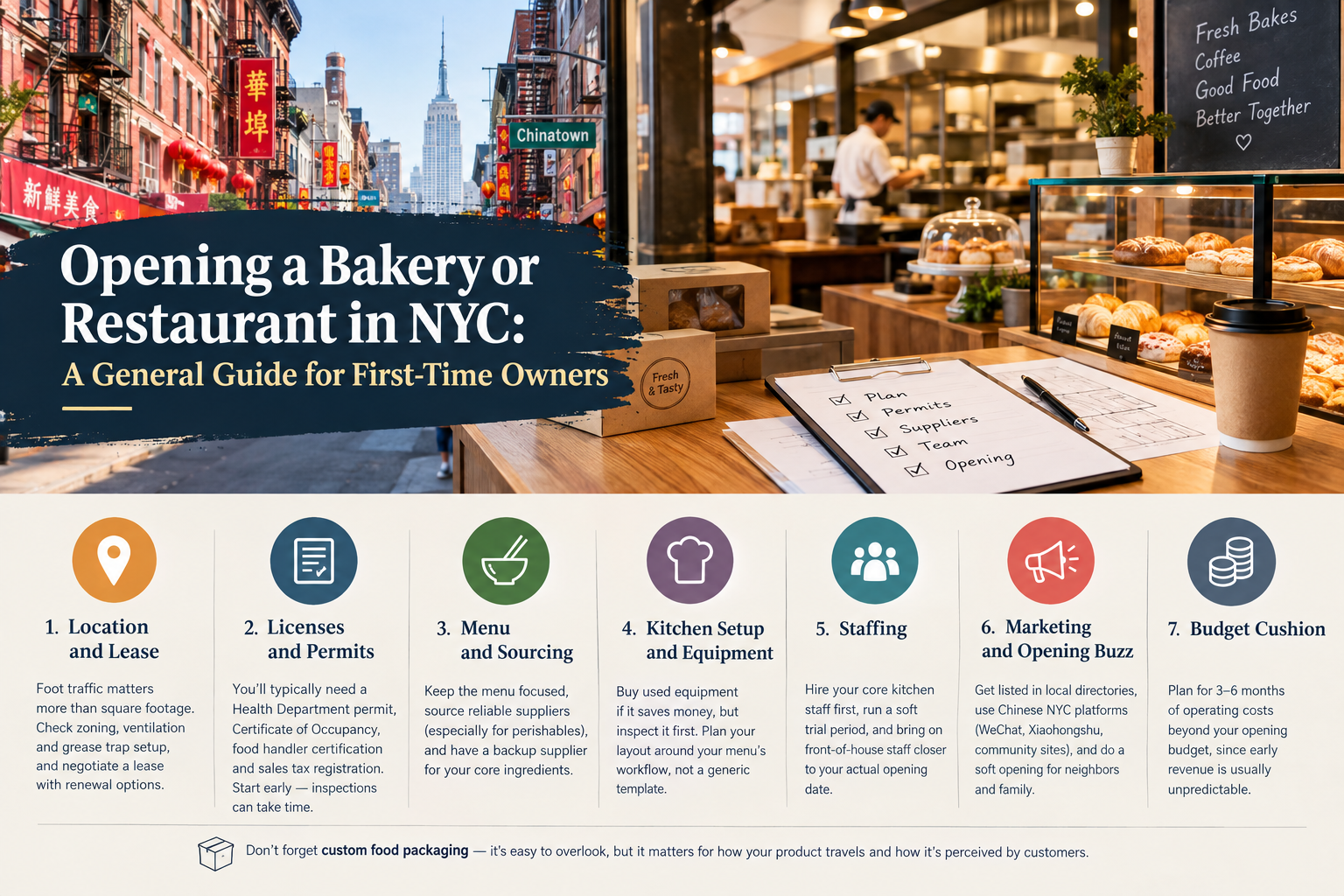
# Opening a Bakery or Restaurant in NYC: A General
Flushing, Sunset Park, Manhattan's Chinatown — new food businesses keep opening across NYC's Chinese community, from hotpot spots to bakeries to noodle shops. It's an exciting move, but also a demanding one. Here's a general rundown of what actually goes into getting a restaurant or bakery off the ground.
## 1. Location and Lease
Foot traffic matters more than square footage. A smaller space on a busy corner often outperforms a larger one tucked away on a side street. Before signing anything, check zoning requirements for food service, confirm the space has (or can get) proper ventilation and grease trap setup, and negotiate a lease term that gives you room to renew if the business takes off.
## 2. Licenses and Permits
This is where a lot of first-time owners get stuck. At minimum you'll typically need:
- A Food Service Establishment Permit from the NYC Health Department
- A Certificate of Occupancy matching your intended use
- Food handler certification for at least one manager on-site
- Sales tax registration with the state
Timelines for inspections and approvals can run longer than expected, so it's worth starting this process well before your target opening date.
## 3. Menu and Sourcing
Keep the opening menu focused. A tighter menu is easier to execute consistently, cheaper to source ingredients for, and less overwhelming for a new kitchen team. Line up reliable suppliers early — especially for anything perishable — and have a backup supplier for your core ingredients in case of shortages.
## 4. Kitchen Setup and Equipment
Buying used commercial equipment can cut startup costs significantly, but get it inspected before purchase. Plan your kitchen layout around your actual menu's workflow rather than a generic template — a bakery's flow (mixing, proofing, baking, cooling, decorating) looks very different from a hotpot restaurant's.
## 5. Staffing
Hiring before you're fully ready to open is usually a mistake — you'll pay wages with no revenue coming in. A more common approach is hiring your core kitchen staff first, running a soft trial period, and bringing on front-of-house staff closer to the actual opening.
## 6. Marketing and Opening Buzz
Local visibility matters enormously in tight-knit communities. Getting listed in local directories, building a presence on platforms Chinese NYC residents actually use (WeChat groups, Xiaohongshu, local community sites), and doing a soft opening for neighbors and family before the official launch all help build early word of mouth.
## 7. Budget Cushion
Almost every new food business underestimates how long it takes to become profitable. A common rule of thumb is having enough reserve to cover at least 3-6 months of operating costs beyond your opening budget, since early revenue is usually unpredictable.
One more thing worth having on your radar before opening day: [custom food packaging](https://www.silveredgepackaging.com/food-boxes/) — it's easy to overlook, but it does matter for how your product travels and how it's perceived by customers.
That covers the core pieces. Getting all of this lined up takes time, but most successful openings come down to sequencing these steps well rather than doing any one of them perfectly.
想了解更多?问问AI小邻
例如:「法拉盛最好吃的拉面在哪」
评论 (0)
登录后即可评论